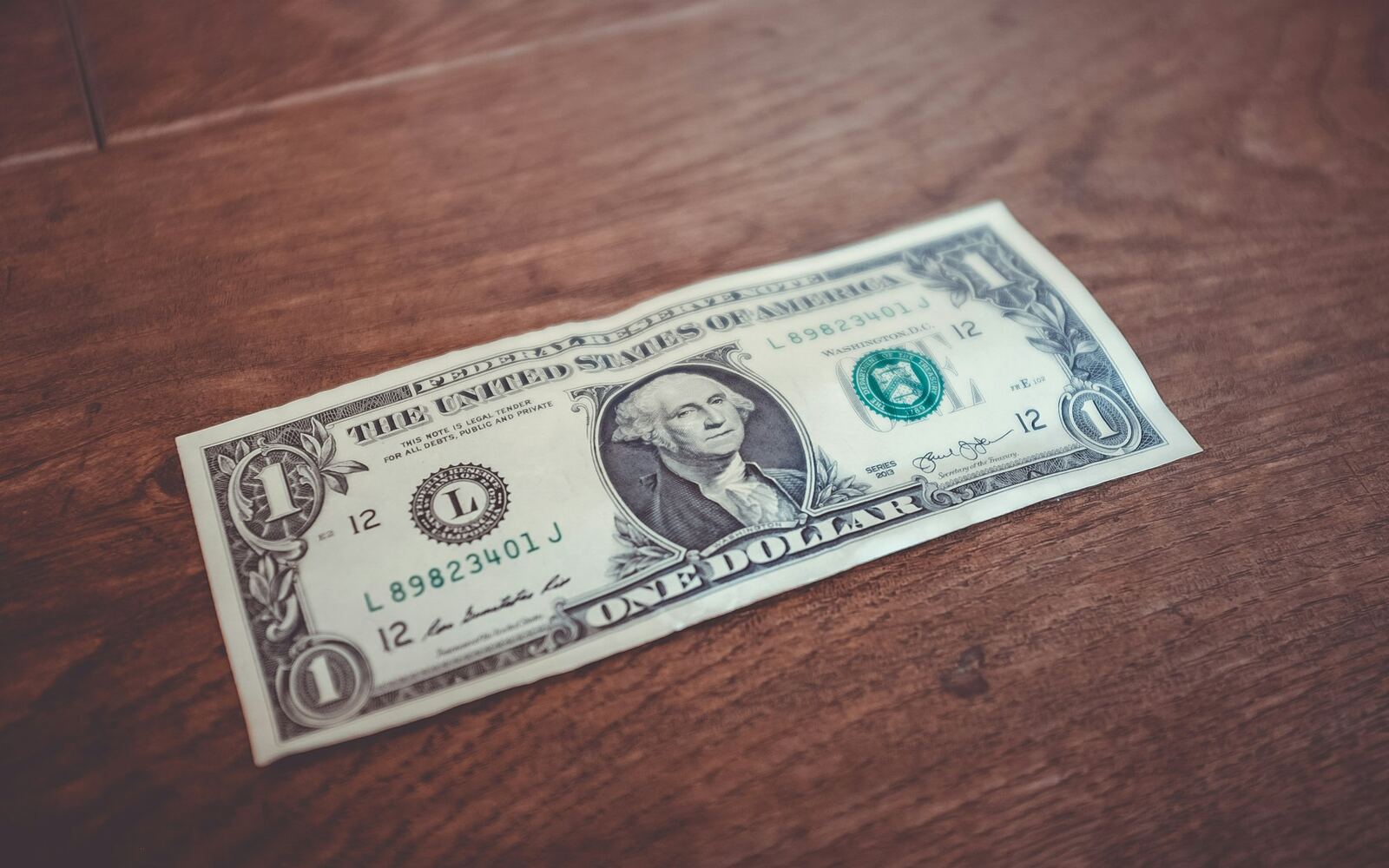
Bolivia's official dollar rate is no longer the fixed Bs6.96. Since Saturday, June 27, 2026, the Banco Central de Bolivia (BCB, the central bank) has published a new Tipo de Cambio Oficial (TCO, official exchange rate) every business day: a single figure calculated from the dollars that banks bought from their customers that day. The TCO in force for Tuesday, November 10, 2026 is Bs11.75 per US dollar, according to the BCB's official page, checked on November 10. That is also the rate Bolivia's tax service requires on invoices issued in foreign currency.
Where the TCO comes from
The new regime has two legal pieces. The Ministerio de Economía y Finanzas Públicas (Ministry of Economy and Public Finance) set up a flexible exchange rate regime with Resolución Ministerial N° 245 of June 26, 2026. The same day, the BCB approved new foreign exchange rules with Resolución de Directorio N° 88/2026 (a board resolution), which repealed the 2013 rules.
Three months later, the BCB replaced those rules with Resolución de Directorio N° 142/2026, dated September 24. It is the rule in force today. Under its Article 5, the TCO:
- Is the volume-weighted median of the dollar purchases that commercial banks, SME banks and the state-owned bank make from their customers, plus those of the BCB.
- Excludes trades between financial institutions.
- Is rounded to two decimals.
- Is the rate for public-sector and BCB operations and for accounting records and valuation, and it is "the reference" for foreign exchange operations by businesses and the general public.
Weighted average until September 24, weighted median since the 25th
RD 88/2026 calculated the TCO as a weighted average. RD 142/2026 switched it to a weighted median. The BCB's technical guide sets the cutoff: the average applies to cutoff dates through 09/24/2026 and the median from 09/25/2026.
To get the weighted median, the rates are sorted from lowest to highest, the amounts are added up, and the TCO is the first rate at which the running total reaches or passes 50% of the total amount. An example with three purchases:
| Trade | Rate (Bs per USD) | Amount | Running total |
|---|---|---|---|
| A | 11.70 | USD100 | 10% |
| B | 11.80 | USD300 | 40% |
| C | 11.90 | USD600 | 100% |
The weighted median is 11.90, because trade C pushes the total past 50%. The weighted average would be 11.85: (100 × 11.70 + 300 × 11.80 + 600 × 11.90) ÷ 1,000 = 11,850 ÷ 1,000. With the median, trades at extreme prices carry less weight.
When it is published and when it applies
- By 5:30 p.m. each business day, banks report to ASFI (Autoridad de Supervisión del Sistema Financiero, the financial regulator) the dollars they bought between 5:01 p.m. on the previous business day and 5:00 p.m. that day. ASFI forwards the data to the BCB by 5:40 p.m.
- At 11:30 p.m. (Bolivia time, UTC−4), the BCB posts the TCO on its website.
- That rate applies the next day. The TCO published on a Friday applies on Saturday, Sunday and Monday. On a public holiday, the rate published on the previous business day applies.
That is why the BCB shows two dates: the fecha de corte (cutoff date, the day of the trades) and the vigencia (the days the rate applies). The Bs11.75 TCO has a cutoff date of Monday, November 9, and applies on Tuesday, November 10. The previous one, Bs11.81, had a cutoff date of Friday, November 6, and applied from November 7 to November 9.
Is there a buy rate and a sell rate?
No, the official rate is a single figure. Until June 2026, the BCB published two fixed rates: Bs6.86 buy and Bs6.96 sell, as its 2026 rates table shows through June 26. Since June 27, the table has a single "oficial" column.
Under RD 88/2026, the BCB also set a "reference selling value" equal to the TCO plus 10 centavos, and banks could not sell dollars above it. RD 142/2026 dropped that rule. Each bank now sets and posts its own buy and sell prices, so ask before you trade.
The BCB also publishes each bank's TCO. For the November 9 cutoff date, they ranged from Bs10.31 to Bs11.80 per dollar, across 2,359 trades totaling USD40,165,575.69. The lowest values came from banks that bought small amounts that day.
Where to check it every day
- bcb.gob.bo home page: the "Tipo de cambio oficial" box shows the rate and the days it applies.
- Tipo de Cambio Oficial, latest rate: the rate, the per-bank breakdown and the daily series since June 27.
- Microdata: trades grouped by bank and rate, with CSV downloads and BCB scripts to replicate the calculation.
- Annual PDF table: every day of the year and the monthly averages, handy for accounting.
You can also follow it on our Official dollar today tool (in Spanish), which reads the BCB rates table and shows the last 30 days and a converter.
Don't copy the rate from social media screenshots. The valid source is the BCB website.
How the rate moved in 2026
All values come from the BCB's official series, in bolivianos per dollar, by the date the rate applies:
| Date in force | Official rate | What happened |
|---|---|---|
| 06/26/2026 | 6.86 buy / 6.96 sell | Last day of the fixed rate |
| 06/27/2026 | 9.73 | First TCO, the lowest so far |
| 07/31/2026 | 12.15 | End of July |
| 09/09/2026 | 12.64 | The highest so far |
| 09/17/2026 | 9.83 | Sharp drop in mid-September |
| 09/26/2026 | 12.05 | First TCO calculated as a weighted median |
| 10/31/2026 | 12.09 | End of October |
| 11/09/2026 | 11.81 | Friday's rate, in force November 7 to 9 |
| 11/10/2026 | 11.75 | In force as of this story |
According to the monthly averages in the same table, the TCO averaged 10.68 in July, 11.75 in August, 11.79 in September and 11.86 in October. The TCO changes every business day, and these figures do not predict where it will go.
The December 2025 reference value is something else
From December 1, 2025 to June 26, 2026, the BCB published a valor referencial del dólar (reference dollar value), with buy and sell figures. Its statement CP01/2026 described it as an informational indicator, calculated from banks' trades with their customers, that did not change "the nature, scope or mandatory status of the official exchange rate." For those months two numbers coexisted: the fixed official rate of 6.96 and the reference value, which on its last day stood at 9.76 buy and 9.96 sell, according to the BCB's historical series. It is no longer published. Today the TCO is both the official rate and the market reference.
And the parallel market
Rates quoted by informal exchange houses, on social media or on crypto platforms are not official. We don't publish them because no official source backs them. For taxes, accounting and the public sector, the BCB's TCO is the rate that counts.
Which rate to use on invoices, contracts and taxes
Invoices. RND N° 102600000026, a ruling by the Servicio de Impuestos Nacionales (SIN, the national tax service) dated July 15, 2026 and in force from its publication, amended the invoicing rules: when a transaction is in foreign currency, the invoice must record "the Official Exchange Rate (TCO) in force on the date of the transaction" as published by the BCB. Financial institutions may use the rate set by ASFI. Commercial export invoices follow customs rules.
Example: an invoice for USD1,500 issued on November 10, 2026 carries a TCO of 11.75. The boliviano amount is 1,500 × 11.75 = Bs17,625.00.
Dollar contracts. RD 142/2026 calls the TCO "the reference" for the public's foreign exchange operations. With a rate that moves every business day, a contract should state which exchange rate applies and on which date, for example the BCB's TCO in force on the payment date. That heads off disputes. Talk to a Bolivian lawyer before drafting or changing such clauses.
Example: a USD2,000 rent payment made in bolivianos came to 2,000 × 12.00 = Bs24,000 at the TCO of October 1. At the November 10 rate, it is 2,000 × 11.75 = Bs23,500. That is a Bs500 difference (about USD43 at the BCB's November 10 rate) in under six weeks.
Large payments. Bolivian tax rules require any purchase or sale of Bs50,000 or more (about USD4,255 at the BCB's November 10 rate of 11.75) to be paid through a financial institution, a rule known as bancarización. See our guide to bancarización (in Spanish).
Common mistakes
- Using 6.96 on new invoices. That rate stopped being official on June 26, 2026.
- Using the rate for the publication date instead of the date it applies. The rate published on Tuesday night applies on Wednesday.
- Assuming the bank must sell to you at the TCO. The TCO is built from banks' purchases. Since September 25, BCB rules no longer cap the selling price.
If you invoice from your own software, make sure it pulls the TCO for the day; we explain how in our guide to online invoicing with your own system (in Spanish). If you import or export, see our guides to importing and exporting as a small business (both in Spanish).